Every Tuesday afternoon we publish a collection of topics and give our expert opinion about the Equity Markets.

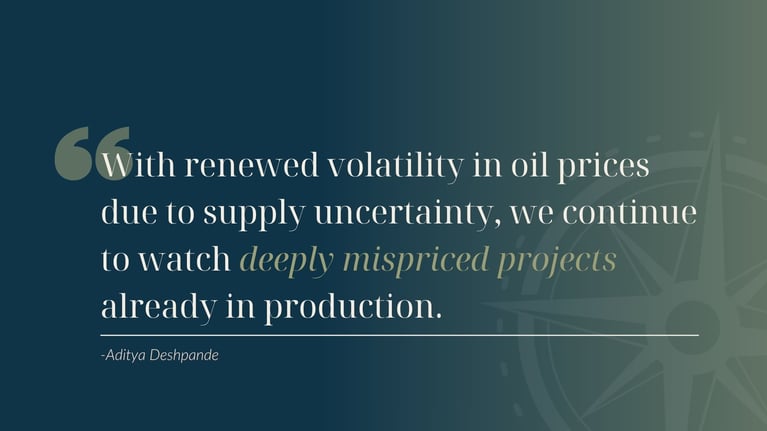
The global oil shock triggered by the closure of the Strait of Hormuz has moved well beyond energy markets. In Australia, it is showing up at the petrol bowser, on farm tracks, in construction budgets and increasingly at the supermarket checkout. What matters now is not whether Australians will feel the impact, but how far it reaches, how fast it moves, and which parts of the economy bear the initial weight.
Diesel sits at the centre of the story. Unlike petrol, diesel is an industrial fuel. It powers the trucks that move our food, the machines that build our homes, the equipment that runs our mines and farms. When diesel becomes expensive or scarce, those costs ripple outward through virtually every part of the economy, often before households have noticed.
Who Gets Hit First
The transmission of a diesel shock through the Australian economy follows a clear sequence.
Freight and logistics are the first point of impact. Fuel costs have surged by as much as 70% for some trucking operators. Emergency bunker surcharges have been implemented by every major shipping line serving Australian trade lanes. These costs do not sit with carriers for long. They move to customers.
Farmers and regional producers are next, and in many cases the hardest hit. Agriculture runs almost entirely on diesel: tractors, harvesters, irrigation pumps and refrigerated cold chains all depend on it. Many farmers rely on ad hoc fuel deliveries rather than long-term contracts, leaving them exposed to a spot market that has tightened sharply. The National Farmers Federation has called for a dedicated agricultural fuel allocation plan, warning that producers cannot get the fuel they need in regional areas right now.
Construction and public works absorb the blow through two channels: direct fuel costs on site, and higher input prices for materials. One major pipe supplier has notified customers of price increases of between 27% and 36% on petroleum-based products from April. For contractors already operating on thin margins following nearly 3,600 industry insolvencies in 2025, the compounding pressure is a genuine threat to project viability. Government infrastructure budgets face the same music.
Households feel the impact last, but they feel it broadly. Petrol sits at around $2.50 per litre nationally, with diesel exceeding $3.00 in regional areas. Grocery price increases are now a question of when, not if. Fruit, vegetables, dairy and fresh produce are expected to be among the first items to move, given their reliance on refrigerated road transport. Coles has already shifted to fortnightly freight rate reviews. Uber and DiDi have both added fuel surcharges to rides. The cost of a tradie call-out, a delivery and a weekly shop are all heading in the same direction.
The Broader Economic Picture
Australia imports roughly 90% of its refined liquid fuels, leaving it acutely exposed when global supply chains tighten. At the start of the crisis, domestic reserves sat at approximately 32 days of diesel, historically high but well short of the IEA's 90-day compliance standard that Australia has failed to meet since 2012. The government has since released emergency reserves, relaxed fuel quality standards to redirect additional supply, and appointed a National Fuel Supply Taskforce. These are meaningful short-term responses, but they do not alter the structural position.
The RBA is watching carefully. Fuel prices sit outside the trimmed mean inflation measure used to guide monetary policy, but sustained cost increases flowing into food, freight and construction will show up in underlying inflation over time.
The BPC View
The fuel crisis has moved from an energy market story to a supply chain story, and it is now becoming a cost-of-living story. The speed of that transmission reflects how deeply embedded diesel is in the Australian economy.
Freight, agriculture and construction are under pressure now. Consumer-facing businesses including food producers, supermarkets and retailers will experience the flow-through in the weeks ahead. The duration of the disruption will ultimately determine the economic consequence. A short shock that clears before domestic reserves fall to critical levels is very different from a sustained disruption that keeps global energy markets tight through the middle of the year.
What this crisis has confirmed, above all else, is that Australia's energy security position represents a structural vulnerability that has been underpriced for many years. If there is an opportunity within the disruption, it is that policymakers and industry now have the clearest possible mandate to build the resilience Australia has long needed.
We offer value-rich content to our BPC community of subscribers. If you're interested in the stock market, you will enjoy our exclusive mailing lists focused on all aspects of the market.
To receive our exclusive E-Newsletter, subscribe to 'As Barclay Sees It' now.